
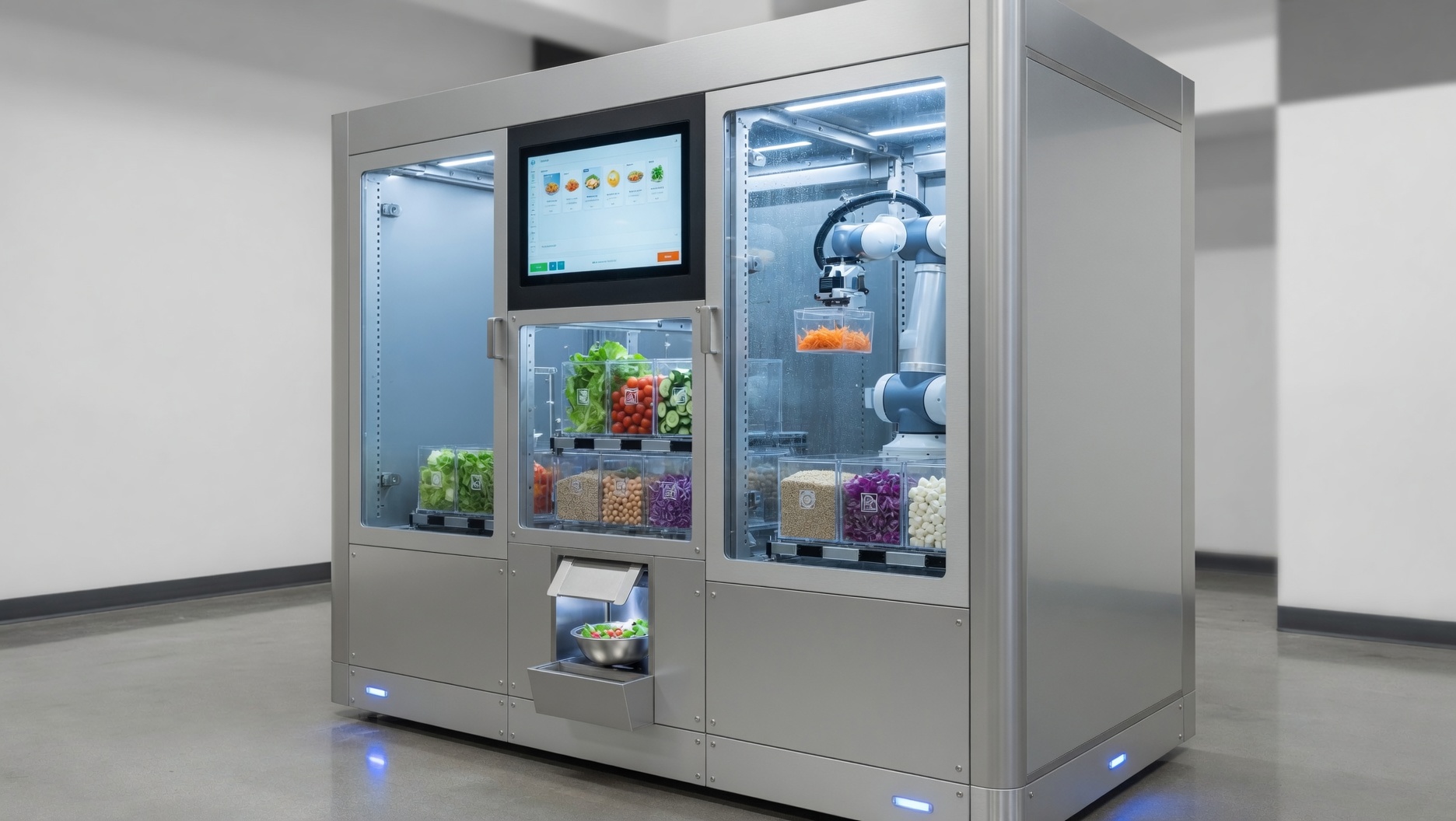
Smart automation is where a kiosk OEM’s design changes weekly and the production order still has to ship on the same schedule it did before the change. Nevatronix Laser cuts the flat-sheet and tube-frame metal behind robotic vending machines, biometric and loyalty kiosks, automated retail cabinets, and recycling kiosks — chassis blanks, tube-frame skeletons, dispensing-mechanism brackets, and cut-pattern vent panels — on the same cell and the same file from first prototype through full production.
What we cut for vending and kiosk programs
A smart-automation cabinet is built from a handful of repeating part families, and we run all of them on one floor:
- Chassis blanks. The flat-sheet base structure a vending or kiosk cabinet builds around, cut to the enclosure’s mounting and cutout pattern.
- Tube-frame skeletons. Square, rectangular, or round tube frames that carry the cabinet skin and internal mechanism.
- Dispensing-mechanism brackets. The mounting plates and chutes that hold and guide a vending machine’s pick, drop, or dispense hardware.
- Cut-pattern vent panels. Airflow and cooling patterns sized to the enclosure’s thermal load.
- Biometric and loyalty kiosk housings. Precision panels with scanner, camera, and card-reader cutouts that register tight to the module.
- Automated retail cabinet structures. Multi-door and locker-style cabinet frames and shelving.
- Recycling and reverse-vending kiosk shells. Weather-exposed outdoor cabinet panels and access doors.
- Self-service terminal frames. Free-standing and countertop terminal structures.
Which tube profile fits a kiosk skeleton?
Most cabinet skeletons run on square or rectangular tube, from 15 × 15 up to 200 × 200 mm, because the flat faces carry hole patterns, tab-and-slot joints, and mounting features on every side in one setup — see square and rectangular tube laser cutting. Round tube from 12 to 220 mm outside diameter covers designs that call for a cylindrical rail or post — see round tube laser cutting, used when the design calls for it rather than by default. Both profiles run on the tube laser cell to 6.2 m length, with hole position held to ±0.1 mm and length to ±0.2 mm, and both cut weld-ready joint prep so a frame goes straight to welding with no saw, drill, or coping step — the tube laser vs. saw-and-drill comparison walks through what that removes from a build.
What materials and thicknesses do these enclosures use?
Four materials cover nearly every smart-automation enclosure. Mild steel up to 12 mm carries the structural chassis and frame members. Cold-rolled steel up to 6 mm is the cosmetic panel substrate headed to paint or powder coat. Stainless steel up to 6 mm covers exterior skins on outdoor or washdown-exposed cabinets, such as recycling kiosks. Aluminum up to 5 mm is the lightweight option for portable or wall-mounted units. All four run on the same 3 kW fiber cell at ±0.05 mm profile tolerance, so a program mixing a steel chassis with an aluminum door panel does not add a second vendor.
How fast is prototype-to-production on one cell?
A flat-sheet prototype turns in 48–72 hours; a tube-frame prototype turns in 5 business days. Both move to production on the same file: flat-sheet production runs 5–10 business days and tube-frame production runs 7–14 business days, without a re-quote when the design is already approved. Revision control runs through a MIE Trak Pro ERP, so a mid-program design change gets a new first-article inspection on the affected lot rather than a full program restart, while the prior revision’s traceability stays intact. That is the cost a kiosk OEM avoids by staying on one cell: the retool-and-requote cycle a second vendor would add every time the design moves.
Where the laser cell stops and the cabinet gets built
We cut the metal to your file — chassis, frame, brackets, and panels. Forming, welding the tube-frame joints, hardware insertion, powder coat, and the electro-mechanical assembly and 100% functional test that turns cut parts into a shippable cabinet run through Nevatronix Sheet Metal’s assembly cell, our sister site, under a separate PO. For a new design rather than a revision of an existing one, Nevatronix’s engineering group runs a 6-phase NPI process ahead of the first cut; some of our kiosk OEMs run the same program structure our gaming systems customers do, since a locking cabinet and a vending cabinet share more chassis geometry than either looks like from outside.
What we do not do
We do not design the mechanism, populate electronics, or install the finished unit — those stay with the OEM or its integrator. Design input from us is limited to DFM feedback on the file you send; reverse engineering or value engineering work belongs to the parent company’s engineering group, not this laser cell. If a part suits punching, forming, or a different shop better, we say so rather than force it through the laser.
Send a DXF or STEP file with material, thickness, quantity, and finish to get a quote. Tell us where the file sits in its revision history and whether it is a prototype or a production release, and we will quote the cell and turnaround that fits — or point you to the process that does.