
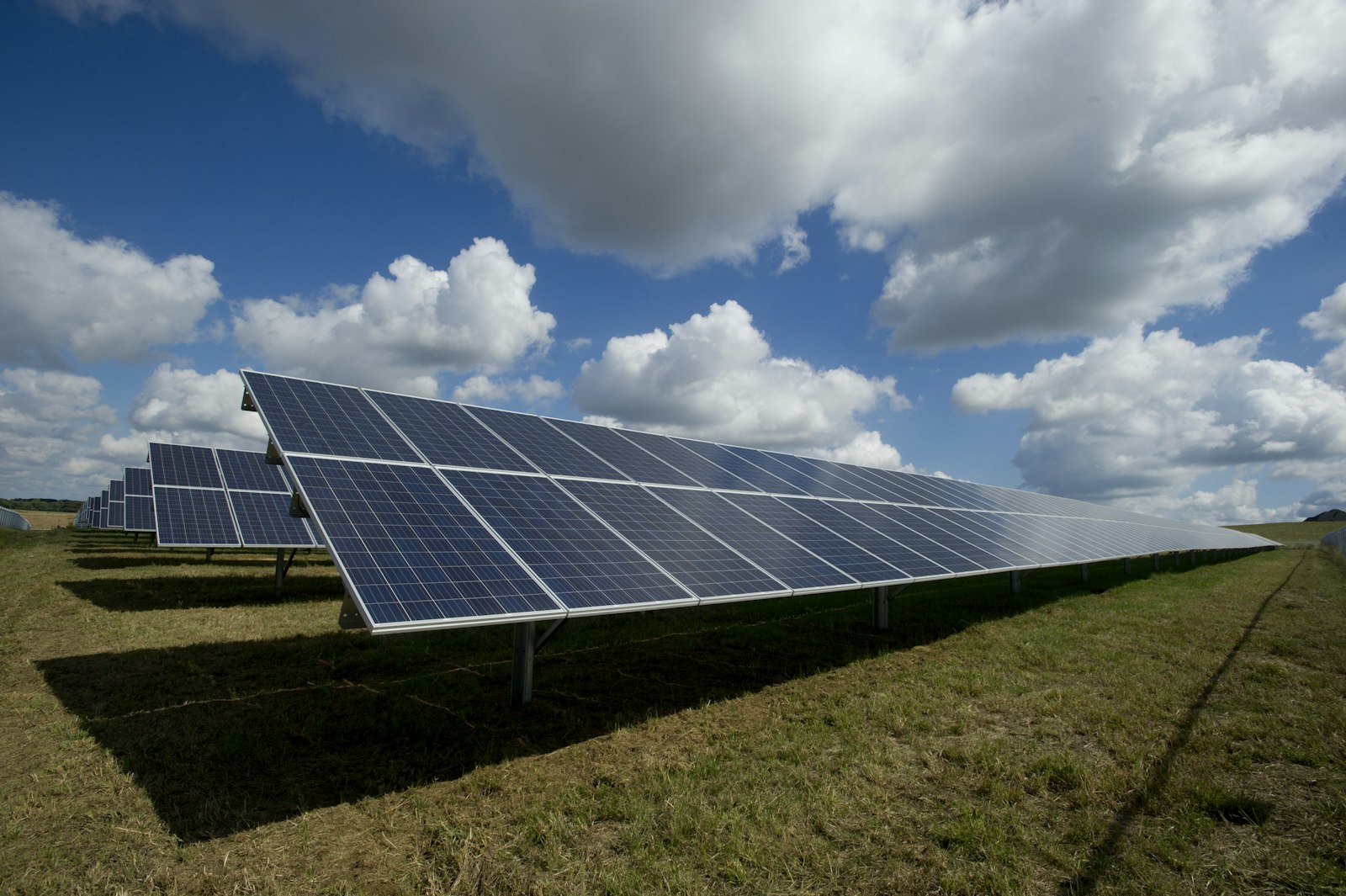
Solar and renewable energy laser cutting covers the flat-sheet and tube parts that go into PV racking, inverter housings, and the junction and combiner boxes that route field wiring — all of it built to hold up outdoors for years. Nevatronix Laser cuts these blanks and profiles in galvanized steel and aluminum, the two materials that carry most of the outdoor duty in solar hardware, for racking manufacturers, installers, and renewable OEMs across the Southwest. Both materials run through the same 3 kW fiber cell that cuts for every other customer on this site, with fume extraction and edge handling built into the process rather than treated as a special case.
What we cut for solar and renewable programs
- PV module racking brackets and clamps. The highest-repeat parts in most racking programs.
- Roof-mount racking sub-frame components. Lighter-gauge, weight-conscious brackets and rails.
- Ground-mount racking sub-frame components. Heavier-gauge structural sub-frames and posts.
- Inverter chassis panels and ventilation grilles. Housing panels for string and central inverters.
- Junction-box blanks. Flat-sheet blanks with gland-plate and gasket-channel features cut in.
- Combiner-box blanks. Enclosure blanks that consolidate DC or AC string wiring.
- Battery-storage cabinet panel blanks. Panel components for storage-system enclosures.
- Cable-management trays. Tray and bracket components for field wiring runs.
Every blank on this list ships against a first-article inspection record, with position tolerance held to ±0.05 mm on flat-sheet parts.
Which materials hold up outdoors, and how do we cut them?
Pre-galvanized steel and aluminum cover most of what a solar program specifies, and each cuts differently. Galvanized steel to ASTM A653 runs on our 3 kW fiber cell up to 12 mm with nitrogen or air assist; cutting vaporizes the zinc right at the kerf, leaving a bare-steel cut edge under coated faces, so fume extraction runs on every job and an edge touch-up is worth specifying where corrosion exposure is high. Aluminum 5052 and 6061 cut up to 5 mm with nitrogen assist for a clean fusion-cut edge — 5052 where the bracket gets formed after cutting, 6061 where it stays flat and structural. Repeatability holds to ±0.025 mm on both materials, tight enough for the bolt-pattern consistency a multi-thousand-unit racking release needs.
How do you cut junction-box and combiner-box blanks?
Junction and combiner boxes are flat-sheet blanks with the ventilation, gland-plate, and gasket-channel features cut in the same pass as the outline, on our flat-sheet laser cell at ±0.05 mm position tolerance — tight enough to keep gasket seating consistent across a run. We cut the blank; forming it into its finished enclosure and adding hardware runs downstream at our sister shop.
Roof-mount vs ground-mount: does the program change?
Yes, and we treat them as separate programs rather than one generic racking part. Roof-mount brackets typically run in aluminum to keep dead load down; ground-mount sub-frames run in heavier-gauge galvanized steel for the added structural duty. Each program holds its own CAM file, material spec, and first-article inspection record, so a switch between roof-mount and ground-mount releases is a documented change, not a re-quote from a blank sheet. First-article approval on the initial release carries forward to subsequent volume shipments without a re-quote, provided the material and revision stay the same.
What volumes and lead times fit a racking program?
Runs move from a single prototype to 50,000 units on this cell, and racking programs commonly sit at the volume end of that range. Flat-sheet blanks turn in 5–10 business days for production with a 48–72 hour prototype option; tube-cut rail and post members for ground-mount arrays run 7–14 business days with a 5-day prototype turn on our tube laser cell, which cuts aluminum extrusion profiles up to 200 × 200 mm section and 6.2 m length. First-article inspection ships with every production order, and PPAP levels 2 through 4 are available on request for programs that need a formal documentation package; lot traceability runs through our MIE Trak Pro ERP.
Where cutting stops and forming begins
This cell cuts flat-sheet blanks and tube profiles — the racking brackets, chassis panels, and box blanks a solar program needs. What it does not do is form, weld, insert hardware, or powder coat. Those steps, along with hot-dip galvanizing through a managed partner, happen at Nevatronix Sheet Metal’s solar and renewable page, co-located with this cell so a blank moves to a finished bracket without a freight leg in between — powder coat there turns in 24 hours, so a released design does not wait long between cut and ship.
Southwest logistics
Parts are cut at our Las Vegas facility, with a second warehouse in Henderson for buffer stock on release-based programs. Nevada, Arizona, Utah, and California ship locally, and the Phoenix solar and utility-scale market runs roughly a day’s freight from the shop; the rest of the continental US ships by freight.
To quote a racking bracket, junction-box blank, or inverter panel, send a DXF or STEP file with material, thickness, quantity, and finish to our quote page. If the part is better suited to a heavier-gauge process or a different shop, we will say so rather than force it through this cell.