
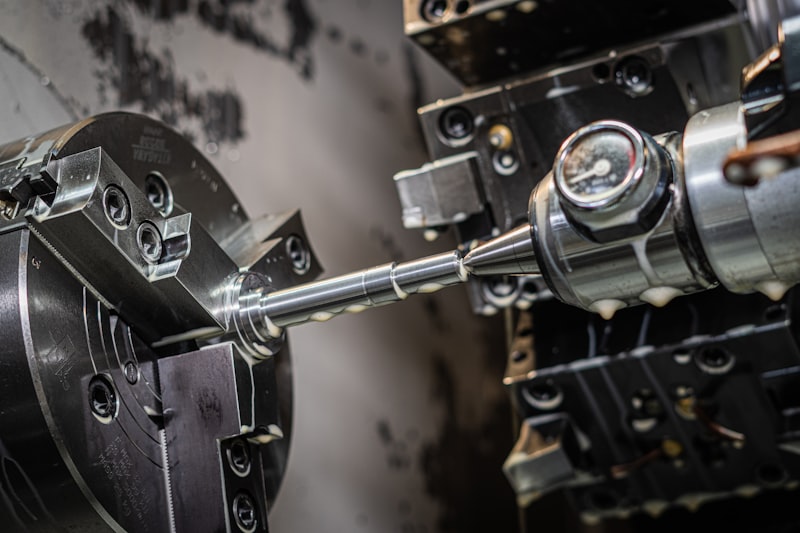
Aerospace engineering teams rarely need volume from a laser cell — they need a fast, documented cut on a design that might revise again next week, and an honest answer about what the cell can and cannot cut. Nevatronix Laser cuts flat-sheet and tube metal prototype and low-volume parts for aerospace engineering teams: test fixture chassis, ground-support brackets, tooling sub-structures, and the R&D iteration parts a design review generates by the dozen. The work stays in the metals we run every day, at the tolerance and documentation an engineering review expects, rather than reaching for an exotic alloy this cell is not built to cut.
What we cut for aerospace engineering teams
- Aerospace engineering prototype parts. First-cut and revision parts off a design that has not locked yet, run against the file the engineering team is actively iterating on.
- Composite tooling sub-structures. The metal frame and backing structure beneath a composite layup tool — we cut the metal substrate to print, not the composite itself.
- Test fixture chassis and frames. Flat-sheet and tube-frame structures that hold a part under test, built to the fixture drawing rather than a stock design.
- Ground-support equipment brackets. Mounting hardware and brackets for ground-support gear, typically low-volume and revision-driven.
- R&D iteration parts. Rapid-revision parts where the file changes between builds and each iteration needs its own quick turn.
- Tube-frame test rig structures. Welded tube frames for test stands and fixtures, cut on the tube laser cell with weld-ready joints built in.
- Sheet metal mockup panels. Flat-pattern mockups for fit-check and form review ahead of a locked design.
What materials can you cut for aerospace prototypes?
Aluminum, stainless steel, and steel grades cover the aerospace prototype work we take on — aluminum (5052, 6061) up to 5 mm, stainless steel (304, 316, 430) up to 6 mm, and mild steel up to 12 mm, all on the same 3 kW fiber cell. We do not cut titanium, Inconel, or other exotic aerospace alloys — that is outside this cell’s material list, full stop. If a design calls for one of them, we say so at quote rather than attempt a cut outside our envelope, and any flight-hardware alloy substitution decision stays with your engineering team.
What tolerance can you hold on a prototype part?
±0.05 mm on profile and hole position, with ±0.025 mm repeatability, on the flat sheet cell. Parts cut on the tube laser cell hold ±0.1 mm hole position and ±0.2 mm length, whether the section is round tube or square and rectangular tube. Named critical features can hold tighter on request, and the result is documented on the first-article inspection report rather than assumed.
Are you AS9100 certified?
No. We operate under ISO 9001:2015 and do not hold AS9100 certification. For aerospace-flagged work we produce an AS9102-format first-article inspection report and material certification on request — the documentation an engineering team needs to accept a part into its own qualification record — without claiming a certification we do not hold.
How fast can an aerospace prototype turn around?
48–72 hours for a flat-sheet part, 5 business days for a tube-cut frame element, both assuming a quote-ready DXF or STEP file. The same file and cell carry a design into a low-volume build if the program needs a second batch, so a revision does not mean starting over with a new vendor, and the same shop capability scales to production volume up to 50,000 units if a design ever moves past prototype quantity.
How do you document material certification and traceability?
Mill certs are available on request, and every job runs under lot traceability through a MIE Trak Pro ERP. Production orders carry a first-article inspection report by default, and aerospace-flagged jobs get the AS9102-format version on request, with a documented material-certificate-to-part trail an engineering team can attach to its own design record.
What we do not do
We do not cut titanium, Inconel, or other exotic alloys, and we do not qualify flight hardware — airworthiness sign-off and any structural or environmental test program stay with your engineering team. If a prototype part needs a bent feature once the geometry locks, forming runs at our sister site’s press brake forming cell rather than here, since bending is not something this laser floor does. Design input from us is limited to DFM feedback on the file you send; reverse engineering or value engineering work belongs to the parent company’s engineering group, not this laser cell.
Send a DXF or STEP file with material, thickness, and quantity to get a quote. Tell us if the part is AS9102-flagged, and if it needs a material or process outside our envelope, we will tell you rather than force the fit.